// Captain Mushroom Universe
"Every character is a choice about what to do with the truth."
Four characters. Four answers. The Captain investigates. Thistle follows. Pip already knows. Voss has always known. And beyond the walls — Mor waits, ancient and silent, for someone willing to cross.
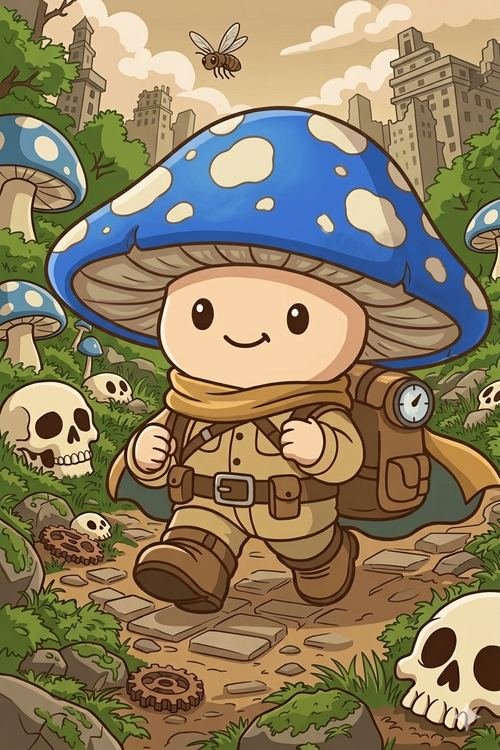
The Captain is the seventh to hold his title — passed down through every generation to the most curious member of the founding family. He did not choose to be the one who notices things. He just couldn't stop.
He is beloved by the Inner World. The markets open when he walks through them. Children follow him. The elders trust him. Which makes what he is beginning to discover all the more devastating — he can't unknow it, and he can't yet share it.
"His investigation starts as an act of worship, not rebellion. He loves the Great Cap. He wants to understand it more deeply. The crisis comes from devotion, not skepticism — which makes it devastating rather than cynical."
// World Bible — The Captain's ArcThe dome was never a prison. The door was never locked. No one ever tried it. What the Captain discovers is not that he was trapped — it's that he was always free, and the choice was always his, and that is somehow worse.
The plant intelligence tells him the truth in fragments across multiple visits: the apocalypse was a correction, not an ending. The dome was a seed vault. He wasn't discovering a secret. He was completing an instruction.
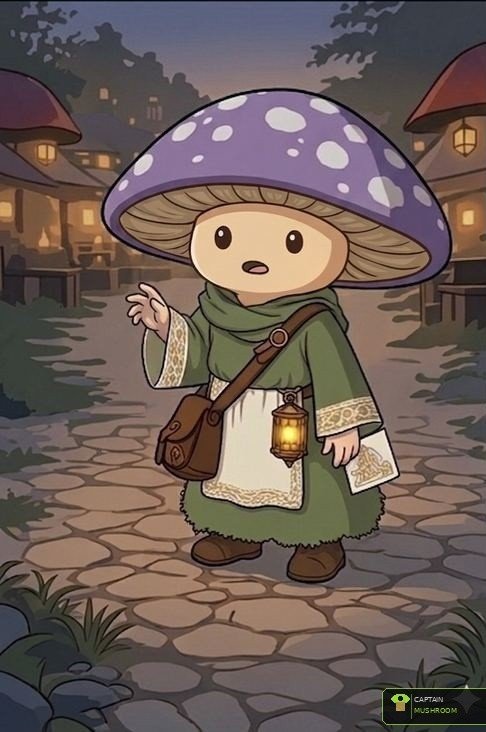
Pip can hear the Great Cap's heartbeat. She always could. She assumed it was ambient sound — like wind or rain. When she eventually learns what it actually is, she will go very still for a long time and then say, almost to herself: "I thought that was just what quiet sounded like."
She draws things she hasn't seen. Her drawings are treated as imaginative. They are mycelial impressions — the network sending her images through a sensitivity she was born with. She has drawn The Long Still. She has drawn something that resembles Mor. She has drawn landscapes the Captain will recognize with physical shock when he returns.
"I thought that was just what quiet sounded like."
// Pip — on learning what the heartbeat isShe asks the question nobody asks — not once, dramatically, but repeatedly, casually, across years: "What's on the other side of the sky?" Most adults deflect. Morwick once stopped walking when Pip asked her and didn't speak for a full minute before changing the subject.
The Captain is the only adult who ever answered her honestly. He said: "I don't know. But I think about it too." That exchange is the entire foundation of their relationship.
She has been to the edge district alone. Found something she told no one — not out of secrecy, but because she had no framework for what it was. A texture in the wall that felt wrong. A sound that didn't match anything in her vocabulary. She drew it when she got home.
Option C — the most hopeful ending for the Captain — is to tell Pip. He saw her in Dome Four when he looked through from the outside. He recognized her. He'd rather she go in with a hand to hold. The cycle continues, but this time someone leaves a better drawing.
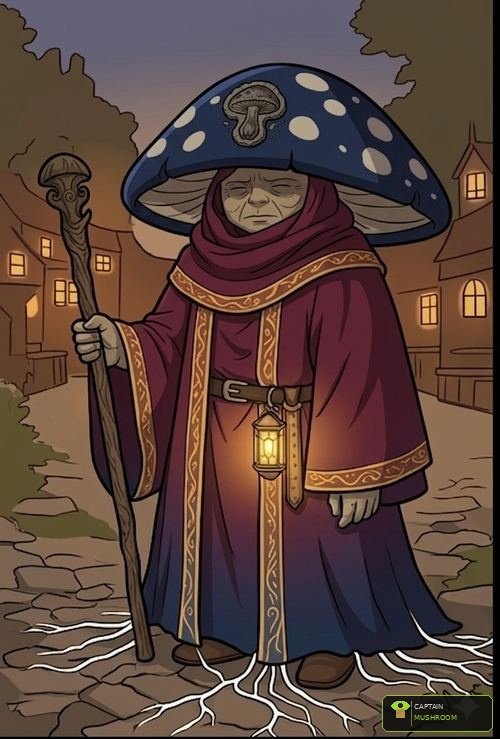
Voss has held the role of Keeper long enough that the weight has settled into something that looks, from outside, like serenity. It is not serenity. It is the stillness of someone who has been carrying something enormous for so long that stillness is the only way to keep from dropping it.
Every generation, one person from the keeper lineage is shown the mirror, the chamber, the heartbeat — and given the same choice every generation was given. Speak or keep. Every single one has kept. Not because they were cowards. Because they went through. Because they came back. Because they understood, standing in The Long Still alone, that understanding is not the same as being ready.
"How long did you sit with Mor before you could stand up again? Three hours. For me it was three hours. I counted. I didn't know what else to do."
// Voss — to the Captain, in the sealed chamberVoss is in the sealed chamber when the Captain returns. They knew — something in the mycelial network registers the crossing. Voss felt it the moment the Captain stepped through and has been waiting ever since.
They don't speak immediately. Two people who have both been to The Long Still. The silence is made of shared experience. The Captain doesn't know whether to feel rage or grief. He feels both. So does the audience. So does Voss.
Not a villain. Not wrong. Voss has watched the Captain the way someone watches a fire they know will eventually burn the house down — not with hatred, but with a specific, exhausted grief. Has been incrementally, carefully, almost tenderly redirecting him for years. Care expressed through misdirection. The cruelest kind of love — the kind that knows what it's doing and does it anyway.
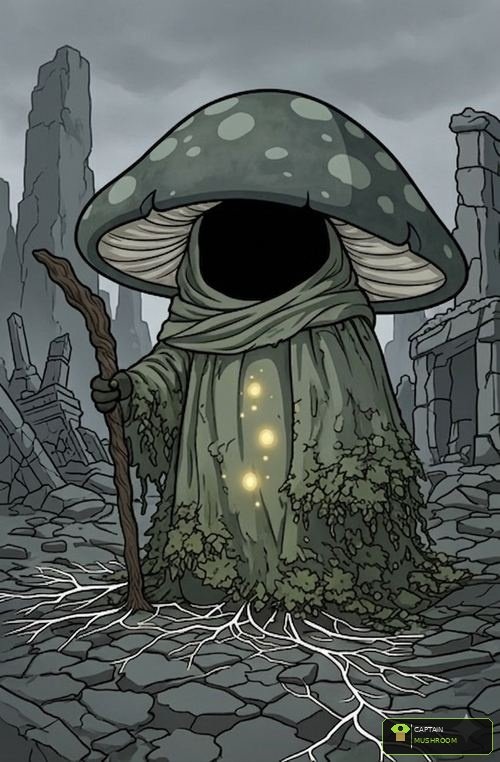
Pre-dome. Possibly pre-apocalypse. Has survived everything. Cannot cross into The Remembering. Does not try. Has accepted its limit without bitterness. The witness who cannot testify.
Mor communicates through gesture, orientation, reflex — not language. When Mor turns toward something it means something. When Mor recoils the Captain pays attention. Communication built from centuries of survival instinct rather than words.
"The first name he has ever invented. In his world all names are inherited. This is the first time he reaches into himself and makes one from nothing. He is the first."
// World Bible — on naming MorThe name Mor may be the closest surviving fragment of what these beings were called before the apocalypse. He named it right without knowing. This suggests his connection to this world runs deeper than he understands — he carries something ancient in him that surfaces when he reaches for it.
What does Mor do after the Captain leaves? Does it wait? Does something change in it — imperceptibly slowly — after being named for the first time? After decades of carrying an identity given to it by the first thing to cross through and speak to it? The mystery is the content. The answer is withheld deliberately.
Mor is the only thing that moves in The Long Still — which makes Mor the only color. Slightly warmer than the gray. The eye goes there automatically. Mor is the last living archive of everything that was here before the dome was built, before the apocalypse was survived, before the world made its correction.
Voss sat with Mor for three hours after crossing through. The Captain sits too. Every person who has ever crossed through has sat with Mor and not been able to stand up again for a very long time.
Every person who has crossed through has had to sit with Mor before they could continue. Mor is not a guide or a guardian. Mor is what happens when you outlive everything you've ever known and keep going anyway — not because you're brave, but because stopping isn't an option.
The Captain named Mor. Mor may be changed by it — imperceptibly, slowly, across decades. That possibility is never resolved. It doesn't need to be.